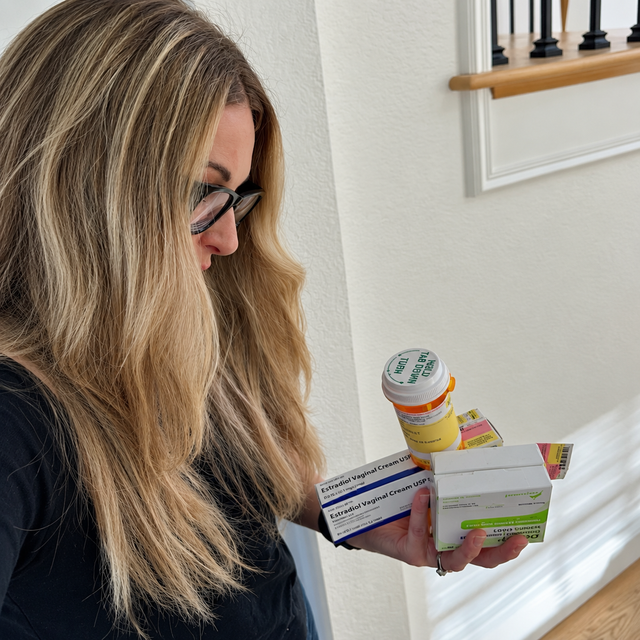

During the pandemic, I was running the Mom Culture warehouse and doing virtual school with all three of my kids. I had a lot of balls in the air, and suddenly, things I had previously been able to manage felt so much harder.
Then the balls came tumbling down.
The overwhelm was the worst part. Something I had managed before now felt crippling. There was new anxiety, forgetfulness about important things, and that feeling of trying to keep everything going when my usual ways of coping were no longer enough. The overwhelm was REAL.
I was also seeing struggles in my daughter that I recognized in myself. That was what made me pause and wonder if ADHD was part of what was happening. I sought help, and at 40, I received my second ADHD diagnosis.
My first had been in childhood but my parents didn't treat it beyond giving me coffee. Somehow, I needed to revisit what that meant for me as a grown woman, a business owner, and a mother of three.
The explanation that hit home
In that conversation, my doctor explained that women can reach a point where changes in career, family demands, and hormones overwhelm the ways they have previously been able to manage. They may have been able to juggle everything for years, until suddenly they find they simply can’t.
That explanation hit me hard. It was exactly how I was feeling.
Looking back at my forties, I connect the changes in my hormones with the feeling that my previous coping strategies came crashing down. I also had the very real demands of a pandemic, a warehouse, and three kids learning at home. I can’t separate all of those pieces neatly, but I wanted to understand what was happening to me.
Medication helped. So did giving myself some grace.
I started ADHD medication, and it was super helpful. I could finally focus on tasks I had been ignoring, like my email inbox and the less exciting parts of running a business. Those things still needed my attention, even when they weren’t the fun part of Mom Culture.
One of the biggest things I learned was that properly managed ADHD treatment can sometimes help with sleep, too. Some adult studies have found improvements in sleep with ADHD medication, but the effects vary, and medication can also cause insomnia. Medication, dose, and timing need to be tailored with a prescriber; sleep changes are something to monitor together.
I also started treating myself more like I treated our daughter and her ADHD. Giving myself more grace. Learning what tools in the box actually helped me thrive.
I began looking differently at the talking, the excitement, and the chaos that had always been part of my sparkle. Some of those qualities overlapped with my ADHD. I also started recognizing ways I had covered up or compensated for the parts that were harder.
My sparkle is still mine. Understanding myself better has helped me see the effort underneath it, too.
A few tools in my box
Headphones. I use them to help me focus and reduce distractions. They also signal to my kids that I’m working or need to concentrate. I prefer over-ear headphones to earbuds.
Touch it once (or give it a home)
One of the simplest ADHD tools I’ve learned is something I literally say out loud to myself: “Touch it once, Sarah.”
You know when you grab the mail, put it on the kitchen counter, move it to the dining table, and then move it back to the counter three days later? Or pick something up to put away, only to set it down somewhere else? That’s what I’m trying to avoid.
If something takes less than two minutes, I try to handle it right then: toss the junk mail, put the shoes away, add the appointment to my calendar. If it needs more time or attention, I don’t have to drop everything. I give it a next step: schedule it, add it to my list, or put it in a designated place where I’ll actually see it again.
The goal isn’t to do everything immediately. It’s to stop handling the same thing five times without making a decision. Does it work every time? Absolutely not. But it saves me a surprising amount of mental energy dping the "touch it once" method.
Time blocking and writing things down. Breaking the day into manageable chunks, putting appointments and tasks in a planner, and using a timer give me somewhere to put what needs doing, outside of my own head.
Grace. Giving myself the understanding I gave my daughter belongs in the toolbox, too.
Jessica McCabe’s How to ADHD book and YouTube channel have helped me think about practical strategies for working with an ADHD brain and I have learned so much from her page and book.
Why ADHD can feel harder during perimenopause
This is the part I wish we talked about more. Research suggests that hormone changes may affect ADHD symptoms, although there is still a lot we don’t know, especially about perimenopause and menopause.
Estrogen influences brain signaling, including dopamine pathways involved in attention and motivation. During perimenopause, hormone levels fluctuate. Researchers are exploring how those changes may affect attention, working memory, and emotional regulation in women with ADHD. Sleep disruption and mood symptoms can add to the difficulty, and menopausal brain fog can overlap with ADHD symptoms.
It helps me understand why the same tools might feel less effective at a different stage of life. But the research does not tell me exactly how much of my own overwhelm came from hormones, ADHD, or everything I was carrying.
HRT has not been established as a treatment for ADHD. Menopause care and ADHD care can both matter, and the right approach depends on the person.
The hormone side of my story: ADHD wasn’t the only thing I was navigating. I also shared what my first year on hormone replacement therapy actually looked like the improvements, the things I’m still figuring out, and why I wish I’d sought help sooner. Read my one-year HRT update →
The girls who were missed, and the women seeking answers now
I think about other GenX and elder millennial women who were high achieving and had ADHD that nobody recognized. My childhood diagnosis is part of my story, but many women reach adulthood without one.
ADHD in girls does not always match the stereotype people expect. Inattention and less obvious symptoms may be overlooked, and coping strategies can hide the struggle. You really do make masking your whole personality in my experience.
CDC data collected in 2023 found that more than half of U.S. adults with a current ADHD diagnosis had first been diagnosed in adulthood. That finding covers adults overall, not women specifically.
Being capable, getting things done, and having ADHD can all be true. What people see accomplished doesn’t necessarily tell them how much effort it took.
I’m still navigating this, too
After finding medication helpful, I later took about 18 months off my ADHD meds, thinking yet again that maybe I could manage without them. Shocker I couldn't. I’ve now been back on medication since July 2026, so navigating both HRT and ADHD medication is still newer territory for me.
I don’t have a finished story where everything is sorted out. I’m learning what support I need now, and trying to give myself the same understanding I would give my daughter or fellow mamakind.
If the things you used to manage now feel overwhelming, that is worth talking about with your healthcare provider. Describe what has changed, how it affects your day, and any changes in sleep, mood, or your cycle.
What I want another mom to hear is this: you deserve help understanding what has changed, and you deserve some grace while you figure it out.
xo, Sarah
Resources and further reading
- How to ADHD — Jessica McCabe
- Dr. Sasha Hamdani
- ADHD and perimenopause research (PubMed)
- CDC: ADHD data
This is my personal experience alongside research, not medical advice.