

This post contains an affiliate link. I may earn a commission if you shop through it, at no extra cost to you.
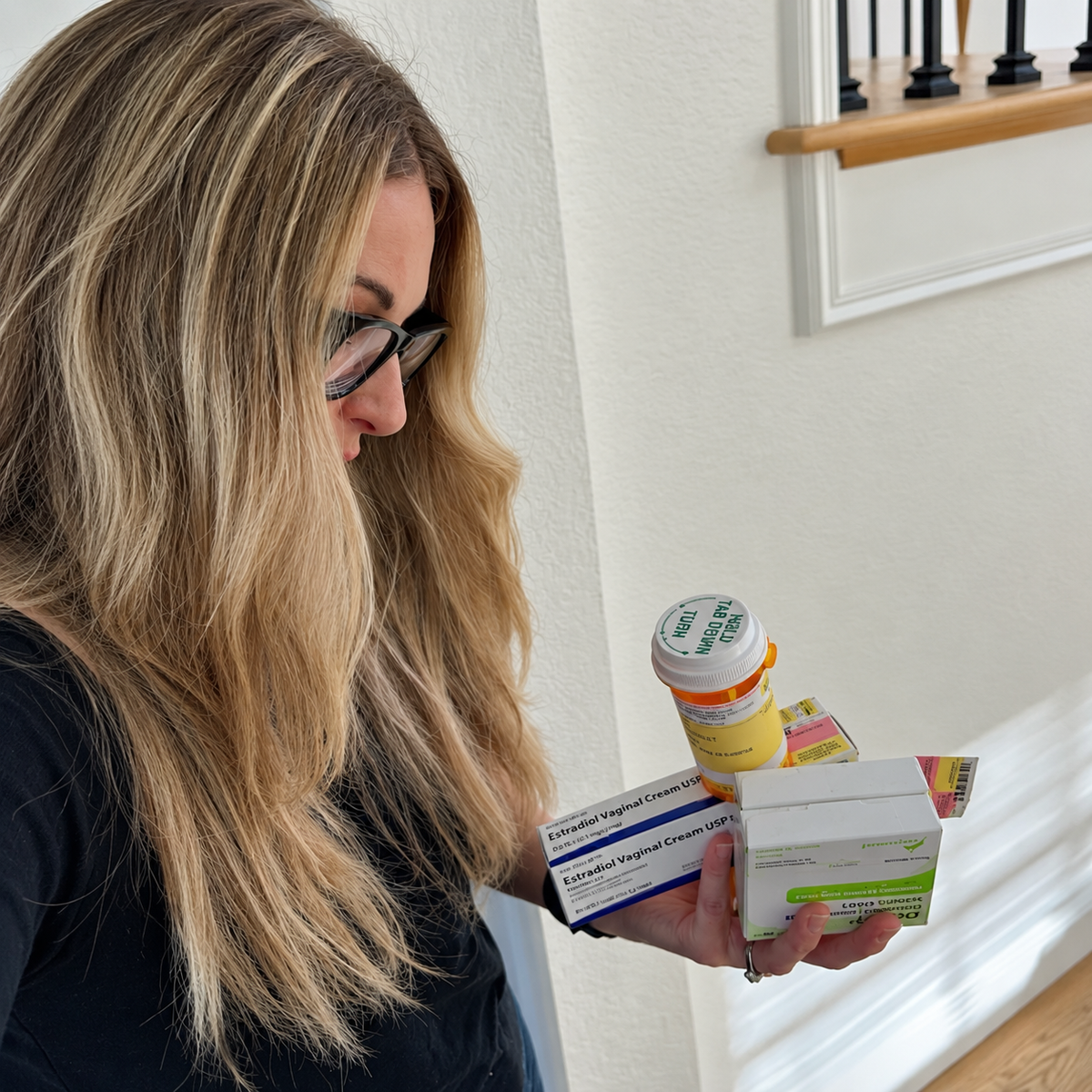
Last August, I shared a photo of myself in my Instagram Stories holding the prescriptions I was starting and told you my sparkle had checked out. Hello, midlife.
I had already spent a couple of years doing the hard inner work. Shedding old habits, setting boundaries, letting go of things that no longer served me. I honestly felt more rooted in myself and who I was than I ever had before, which made it especially frustrating to feel so exhausted and disconnected from my body, like a ton of bricks was dragging me down.
Like, hello? I did all this inner work, and now my hormones were entering the chat to shake shit up again. It was like all the balls I had been juggling just came tumbling down, and I could no longer juggle a single one.
I’m now a little over a year into my hormone replacement therapy, or HRT, and I’m feeling so much better. But there have been adjustments and then more adjustments, appointments, symptoms to pay attention to, and things I’m still figuring out. Sleep remains a battle. Libido is still a work in progress. And feeling better didn’t mean I suddenly stopped needing care for my ADHD. More on that in a minute.
So here’s the update I would have wanted to read when I was trying to figure out where to start and what to expect.
How I started HRT—and what I paid for myself
For starters, full transparency: I paid out of pocket to see a local hormone specialist, Casey Stumpf, FNP, at Clique Wellness Collective in Temecula. I wanted to get my labs checked, talk through what I was experiencing, and get some REAL help getting started.
I had already been told my hormones were “fine.” Drink more water. Exercise. Lose weight. I had also been offered an SSRI by a few doctors over the past few years. Meanwhile, I still felt like a shell of my former self.
What I remember most about those first conversations with Casey is feeling seen. Being able to explain what was going on and feel like someone was actually listening to me. She also gave me homework: read You Are Not Broken: Stop “Should-ing” All Over Your Sex Life by Dr. Kelly Casperson. THIS IS A MUST-READ!
She ordered my prescriptions and was even able to get my estrogen patches, vaginal estradiol cream, and progesterone covered through my Kaiser insurance. My testosterone came from a compounding pharmacy and was part of a monthly membership program. Casey waited for my results before prescribing testosterone. When mine came in, I remember her telling me my testosterone was extremely low and acknowledging how bad I felt. Hello, VALIDATED!
That was how it worked for me. I paid for the specialist and the initial lab work myself, and some of my prescriptions went through my insurance. I’m sharing that because the practical side of getting help can feel confusing, especially when you’re already exhausted. There can be a lot of upfront cost to actually get the help we need, but thankfully there are options. They just COST.
This care wasn’t sponsored. I paid for it.
The early changes I shared
Looking back at my Highlights, I can see how closely I was watching for any sign that I might start feeling better because, damn, I was feeling so low daily with zero energy and bandwidth.
In September 2025, I shared that I was actually sleeping. For someone who had struggled with sleep since childhood, that felt strange enough that I told my husband I didn’t know how to function with it. How do normal people just sleep?
I also, on occasion, take trazodone for sleep alongside my hormone treatment, so that update included more than HRT alone in helping with my newfound rest. One thing my provider told me is, "I can give you all these tools, but if you don't sleep, nothing is gonna stick." And that hit me hard because sleep has forever been a lifelong battle.
I noticed a slight increase in energy and a little less brain fog. That brain fog had been wearing on me, legit mentally. Forgetting where I parked and needing markers to find my car sounds like a small thing until you’re the one doing it and wondering what the hell is happening. Ladies, I was worried it was early dementia. Like, no joke, I was so worried.
My libido? Still low. I said I would keep you posted, and apparently we’re keeping promises to stay very honest. I'm still working on this one, and I think after reading that book I have a way bigger understanding of the why and newfound respect for how my mind-body connection works in this area.
A year later, there are still adjustments
The biggest thing I’ve learned about my own experience is that this takes a lot of work and attention. I feel so much better, but it's still a legit rollercoaster. I heard someone on a podcast compare the perimenopause years to trying to pin a tail on a moving donkey. Your hormones are all over the place. And I totally agree.
I now invest in a panel through Goodlabs about every three months. I love having that information to bring into the conversation about my care, alongside how I’m actually feeling. My treatment has been tweaked here and there based on my results and symptoms, including an increase in my patch dose.
When I first shared my routine, I was using my estrogen patch during the week before my cycle. I now wear it continuously. After my latest results and a message to my doctor, we increased the dose. Knowing my numbers and paying attention to how I actually feel has helped me ask better questions about my care.
Some days, it feels like this patch, God, and my rescue dog are holding the whole operation together. 😂
I also want to share that, during a routine physical, my new primary care doctor noticed changes in my health measurements and asked what I was doing. When I told her I’d gotten out-of-network help for my hormones, she let me know she supported the care I was getting and could take it over. She herself was doing HRT and a GLP-1. I mean, what were the odds? I finally have a doctor on board with women's health care after years of being dismissed.
The gods shined down to help me and save me some money.
So that’s where my treatment is today. Things will keep changing, but at least now I have some understanding of where I’m going on this new journey.
Sleep, libido, and a house full of teenagers
Sleep is still one of my biggest battles. I’m doing much better with my overall sleep hygiene and routines now, but I can’t honestly say that I started HRT and became a person who sleeps beautifully every night.
I wish. Truly. But that’s still not the case. It’s so much better than it was, and I take that win.
There are still those libido issues, too. Although, hello, teenagers. If you take the hint, you understand that hormones aren’t the only thing we’re working around over here, but having tools in my midlife box has helped me have better discussions with my husband.
I also went back on my ADHD medication
I went off my ADHD medication, as so many do. If you know, you know. I wanted to solely focus on my hormones and overall health. I thought I was doing great, as most of us do. I tend to be a “less is more” person when it comes to my body, so I thought I was doing the right thing.
Well. That was not my best idea at all.
So yes, I went back on my ADHD medication. Getting back into care came with its own insurance and evaluation frustrations, which I also shared (hello, fourth evaluation). Apparently, I needed another reminder that I can feel better in some ways and still need support in others. It was humbling.
The powders, supplements, and everyday stuff, too
If you’ve seen my Stories, you know there are powders involved. Supplements. A GLP-1 at what I call a microdose. And me trying to keep track of it all with an ADHD brain. It feels like another full-time job.
My powder routine includes protein powder, creatine, collagen, and Sunfiber. These are part of the bigger picture of how I’m taking care of myself alongside my meals, movement, and medical care.
I’ve also shared my supplement lineup: boron complex, vitamin K2 MK-7, zinc picolinate, acetyl-L-carnitine, tongkat ali, a B complex, saffron, CoQ10, omega 3-6-9, and Pycnogenol. L-theanine has been part of my routine, too!
I’m including this info because I want to be honest about everything happening alongside HRT. This is what I’ve used, and my routine can change. I’m not handing you a shopping list or saying you need my stack to feel better.
There were other changes happening during this year, too. More consistent movement and strength training. I still work out using my Peloton Bike and App four days a week. I also still use a combo of walking the dogs, my walking pad, and the rebounder on non-workout days to get my movement in.
Better sleep routines. Boundaries. Saying no. I was rebuilding how I took care of myself in every way, so I can’t credit every change to one prescription, powder, or supplement.
What I would tell Sarah in August 2025
You are worth spending the money on.
And why did you drag your feet so long to put yourself first?
That’s the part I keep coming back to. I wish I had given my own care more priority sooner. Paying out of pocket was a real expense, and I know that option isn’t available to everyone. But when I look back at my own hesitation, I wish I had believed sooner that feeling better was worth investing in and that I didn’t need to feel guilty for wanting that for myself.
I’m glad I finally did.
I’m sharing this chapter for the same reason I’ve shared so many others: sometimes hearing another woman say what’s actually happening makes it easier to say it yourself.
So, a year in, I feel so much better. I’m still monitoring numbers, still adjusting, still battling with my sleep, and still living in a house with teenagers and young adults. It’s a whole new season, this midlife, and I’m just now finding some rhythm in myself again, and it feels good to see a glimmer of the shimmer and sparkle I once had.
xo, Sarah
This is my personal experience with care tailored to me, rather than a treatment plan for someone else.
Find similar articles:
Midlife